
Laser cleaning services
Four kinds of work covering most of what industrial customers need: taking a surface back to clean base material, stripping applied finishes, preparing a surface so the next process holds, and careful work on pieces where the substrate matters more than the schedule. Mobile throughout the entire state of Virginia, plus drop-off and ship-in at our Vinton shop.
Renew
Surface Cleaning
Taking a surface back to clean base material without touching it. Contaminants absorb the beam and lift off; the substrate underneath is left intact.
What this covers
- Rust, corrosion, and oxidation
- Mill scale and heat scale
- Grease, oil, and hydraulic residue
- Carbon and soot deposits
- Mineral and hard-water scale
- Biofilm and organic growth
- Mold and mildew
- Ink and dye staining
- Road grime and environmental soiling
- Weld spatter and shop residue
Fireplace soot removal on brick and stone
Heavy soot had darkened the interior firebrick and surrounding masonry. A controlled test patch established the cleaning approach before the work continued across the affected area.
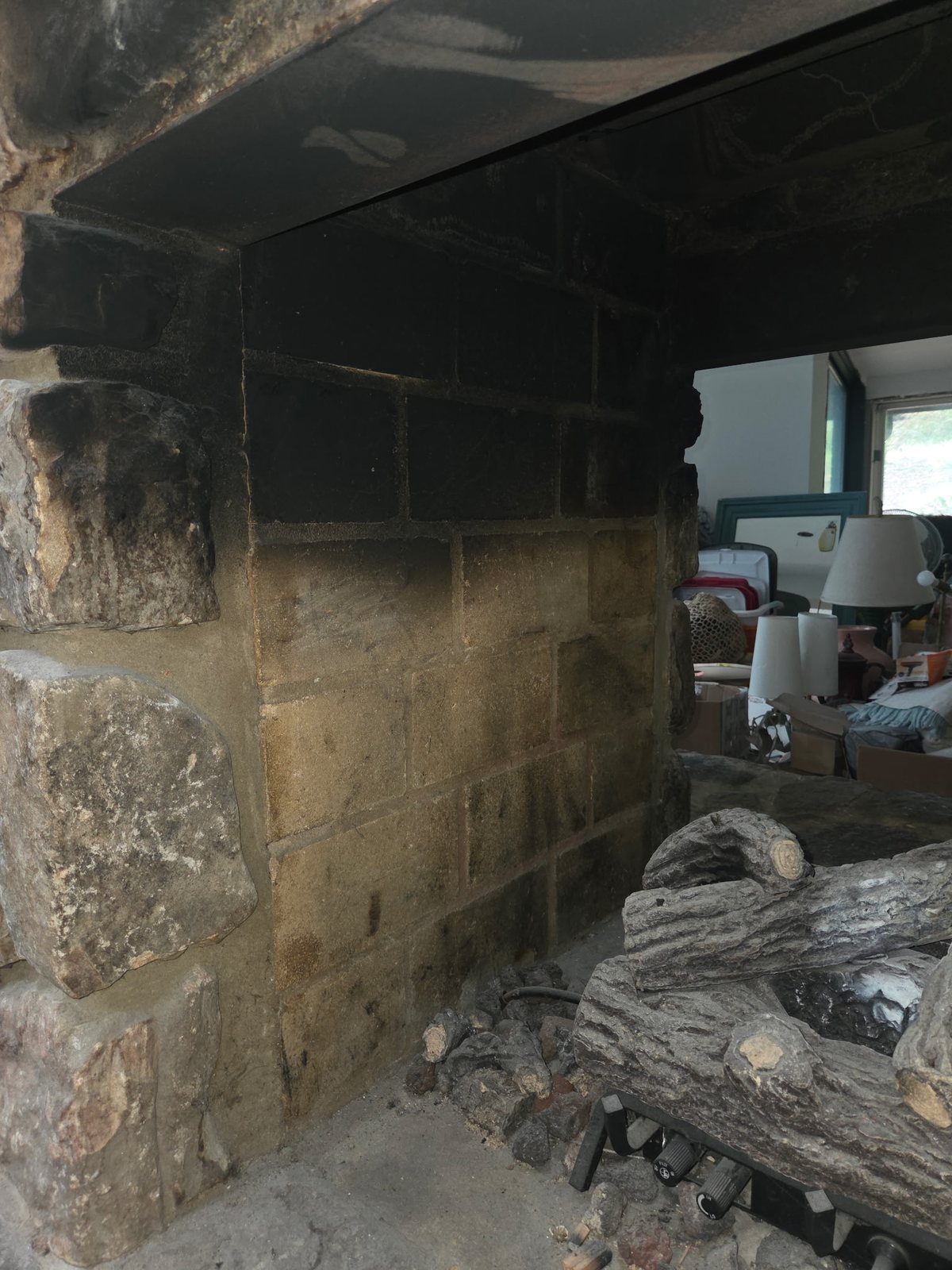
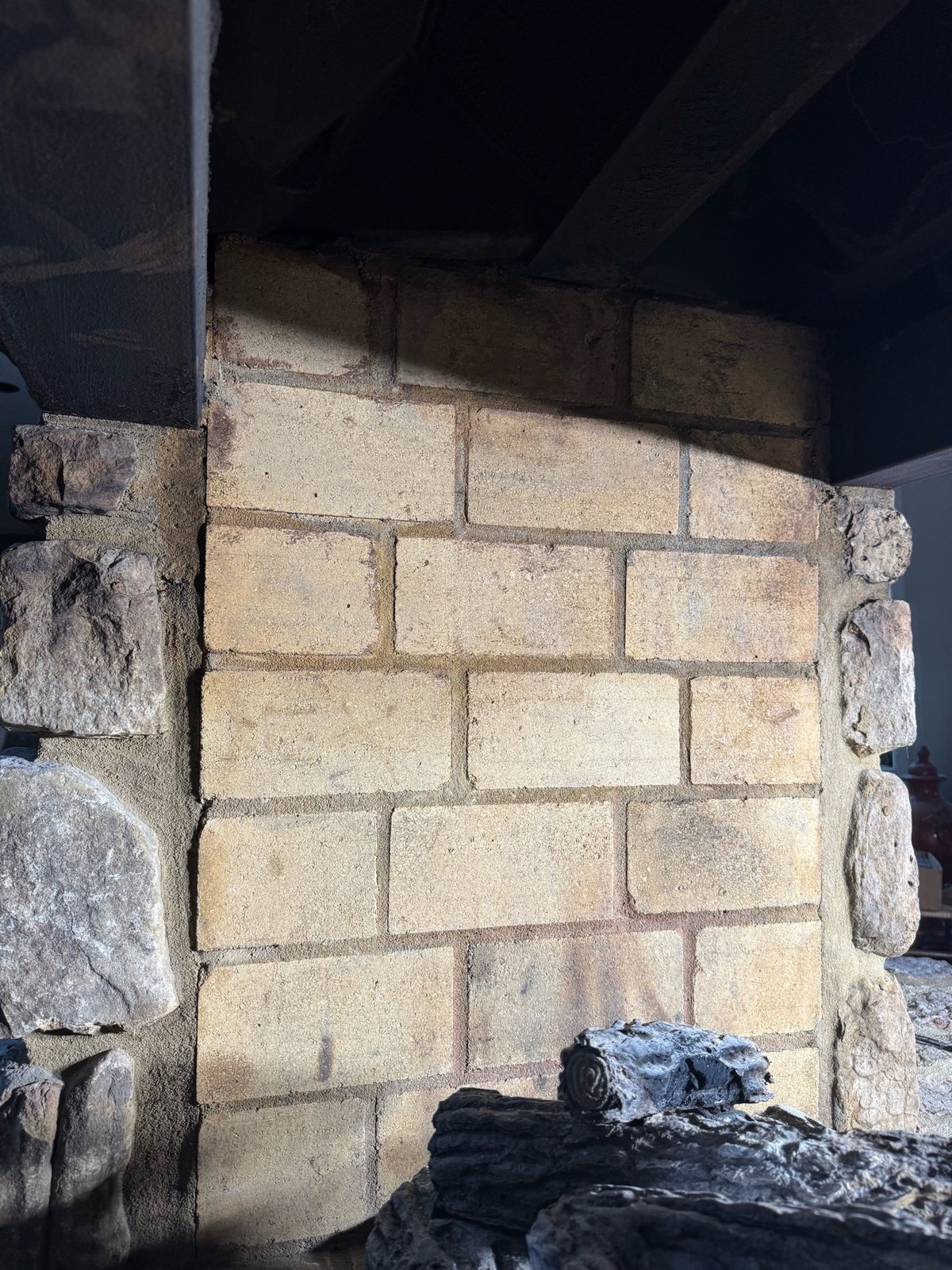
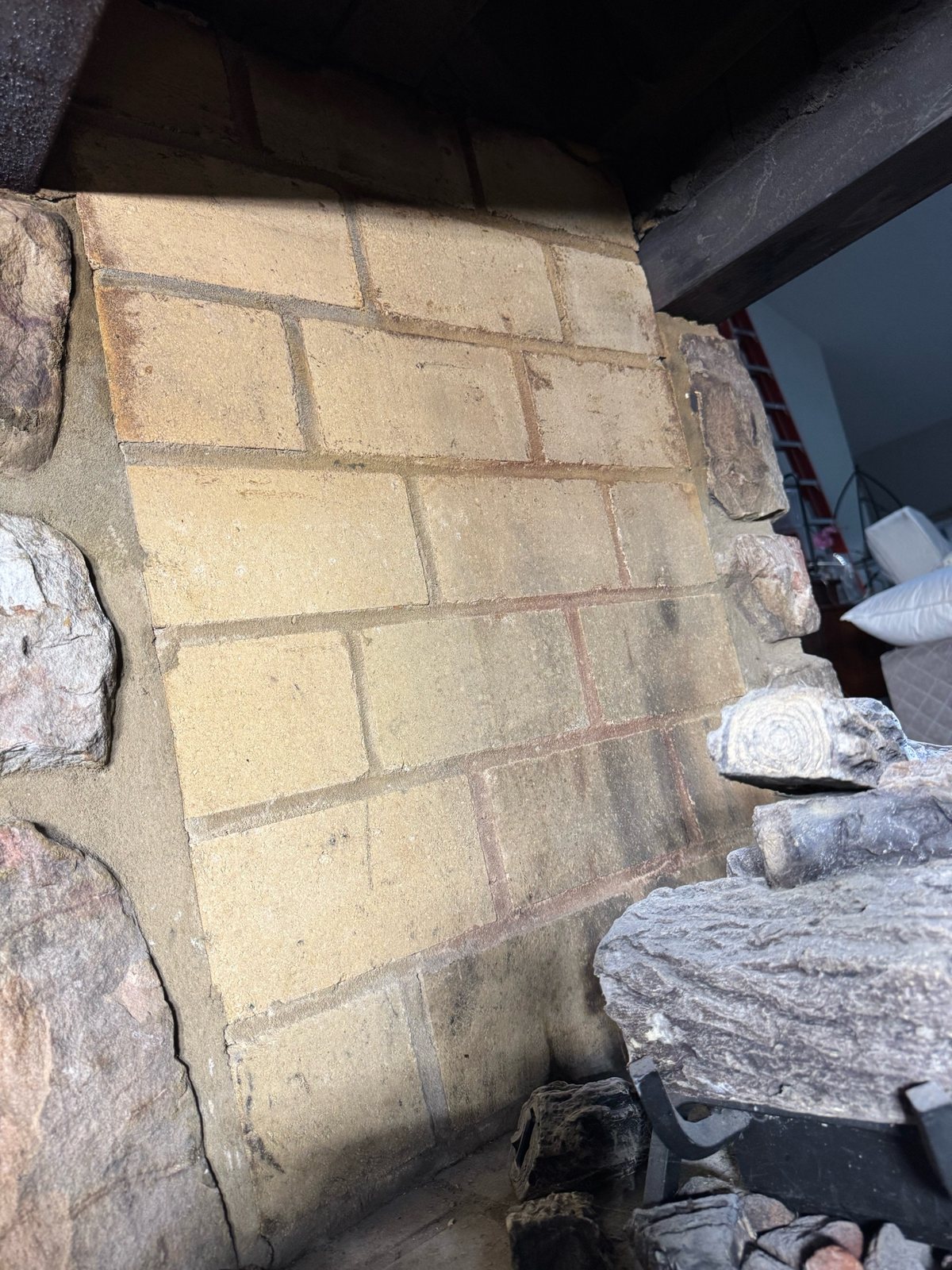
Before and after views from this project. Masonry varies in porosity, condition, and contamination, so each job begins with an inconspicuous test patch rather than a promised finish based only on photographs.
From mobile setup to cleaned firebrick
The short clip shows the equipment staged outside and then the finished firebrick from the same job. It is intentionally trimmed to the setup and result, without the long walk through the active renovation area.
Mobile job-site setup
Equipment is staged for the specific access and work area.
Targeted soot removal
The finished view shows the actual masonry from this project.
Reveal
Coating Removal
Stripping applied finishes selectively — including layer by layer where the job calls for it — with no chemical stripper, no blast media, and no sanding.
What this covers
- Paint, primer, and enamel
- Powder coating
- Varnish, lacquer, and stain
- Adhesives and sealants
- Polyurethane, epoxy, and acrylic coatings
- PTFE and other release coatings
- Rubber and elastomer residue
- PVC and plastisol
- Anodizing and electroplate
- E-coat and industrial topcoats
Ready
Surface Preparation
Preparing a surface so the next process holds. Laser prep produces a clean, dry, residue-free surface with no grit embedded in it and no solvent flash-off to wait on.
What this covers
- Pre-weld and post-weld cleaning
- Solder and braze preparation
- Adhesive and structural bonding prep
- Injection, compression, and blow mold cleaning
- Die casting and thermoforming tooling
- Anilox and impression roller cleaning
- Deburring and edge conditioning
- Prep for powder coat, paint, and primer
- Prep for plating and anodizing
- Prep for inspection and NDT
Restore
Specialty Restoration
Work where the substrate matters more than the schedule. The pulsed machine and a conservative test patch make delicate and irreplaceable pieces workable.
What this covers
- Electronics, PCBs, and connector contacts
- Turbine blades and rotating components
- Aircraft and aerospace components
- Architectural metal and building facades
- Monuments, memorials, and plaques
- Sculpture and cast artwork
- Marine hardware and fittings
- Rail components and hardware
- Vintage vehicles and machinery
- Antique furniture and period hardware
How a job runs
No surprises and no guessing. The test patch is the part that matters most — it is how a quote becomes a real number instead of an estimate.
- 1
We look at the job
Photos and a description get us started, and for anything substantial we come out. We need to see the contamination, the substrate, and how reachable it is — those three things determine everything about the quote.
- 2
We run a test patch
On an inconspicuous area of your actual part, we prove the parameters and time the result. This is where an honest rate comes from, and it is your chance to see the finish before committing to the whole piece.
- 3
You get a number and a plan
Scope, approach, expected finish, and price — by the hour, by the day, or as a fixed job total, whichever fits. If your facility needs a certificate of insurance, a safety orientation, or a permit, we sort that out now.
- 4
We set up a controlled work area
Barriers and signage around the work zone, wavelength-matched eyewear for anyone inside it, hearing protection, and fume extraction capturing removed material at the source. Before the laser is switched on we complete a written hazard evaluation for your site — the controlled area and its boundary, reflective surfaces, what sits behind the work, who else is nearby, and the conditions under which we stop — and we walk through it with you. You keep a signed copy.
- 5
We clean, and you check it
The beam does the work with nothing touching the part. Removed material is captured as we go, so there is no grit to sweep, no runoff, and no residue left behind. You inspect before we pack up.
- 6
The surface is ready immediately
Clean, dry, and free of embedded media or solvent residue — so coating, welding, bonding, or inspection can follow with no dwell or drying time. Bare steel will start to oxidize, so we will talk through timing if you are coating later.
Before you ask us to quote
Two things worth checking first: whether your substrate suits the process, and whether we already work in your sector.
Substrates we work on
Steel, stainless, aluminium, tool steel, stone, concrete, wood, plastics and electronics — with the honest caveat on each, and what our own power and machines bring to site.
Industries we work with
Manufacturing, heavy equipment, automotive, rail, construction, food production, marine, printing, defense, municipal and restoration work, with the specific jobs we are called for in each.